
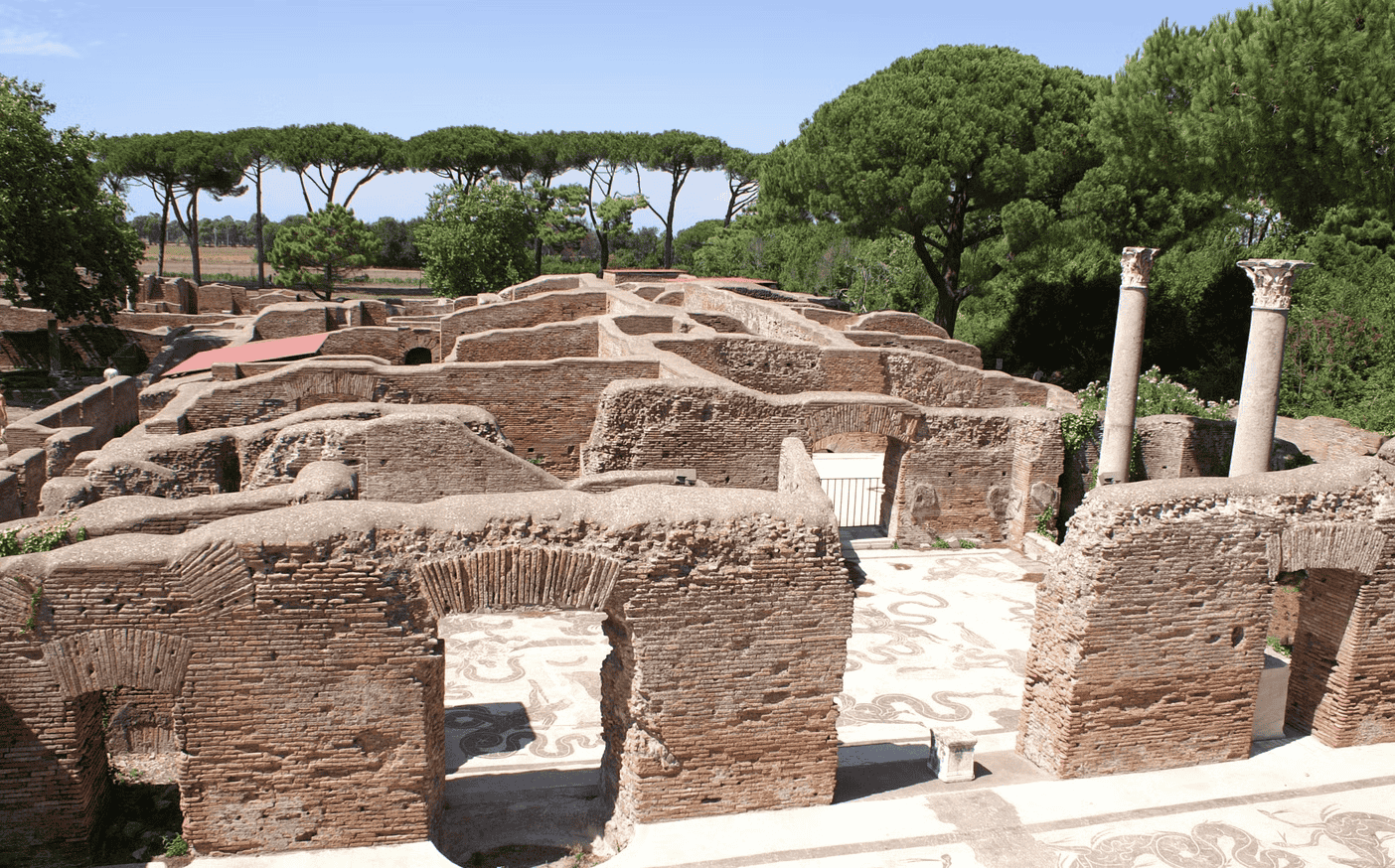


Overview of Ostia Antica & Pompeii

Ostia Antica is an ancient archaeological site near Rome, founded around the 7th century BC. It was the first colony of Rome, built by King Ancus Marcius. This well-preserved site gives a unique glimpse into early Roman life. You can explore its ancient streets, buildings, and artefacts that reveal how the city’s location as a harbour influenced its development.
Unlike other crowded Roman sites, Ostia Antica offers a quieter experience. The on-site museum at the attraction displays many fascinating artefacts from excavations, which makes it a great site for those interested in ancient history and Roman culture.

Pompeii was an ancient city destroyed in 79 CE by the eruption of Mount Vesuvius. The volcano buried Pompeii under about 19 feet of ash and pumice while preserving the city for centuries. It was rediscovered in the late 16th century, and excavations began in the 18th century.
These excavations revealed a wealth of information about ancient Roman life, including social, religious, and economic aspects. It showcased well-preserved buildings, artworks, and daily objects. The fertile land and scenic location of the area on the Bay of Naples made it a popular spot for wealthy Romans.
Origin and Historical Significance of Ostia Antica

- Ostia Antica was likely founded in the 7th century BC, but the oldest ruins discovered are from the 4th century BC.
- It became important in the 1st century AD due to changes by Julius Caesar and Emperor Tiberius, growing as a major port for Rome.
- The attraction then reached its height in the 2nd-3rd centuries AD, with a population of 1,00,000 and a bustling harbour.
- Later, Ostia lost importance as other ports like Portus grew. It became a residential retreat for wealthy Romans.
- By the 9th century, it was abandoned after attacks from Arab pirates.
- Today, when you compare Ostia Antica vs Pompeii, you will discover that Ostia Antica is a well-preserved archaeological site, but less crowded than Pompeii.

Major Attractions to See in Ostia Antica & Pompeii

- Baths of Neptune- The Baths of Neptune in Ostia Antica are a large bath complex with several rooms and an exercise area. You can see a beautiful black-and-white mosaic here that shows the god Neptune riding four horses through the sea.
- Capitolium- The Capitolium in Ostia Antica is a temple dedicated to the three main Roman gods: Jupiter, Juno, and Minerva. It remains well-preserved and offers a glimpse into ancient religious practices. When you compare Pompeii vs Ostia Antica, the temple showcases the religious significance of Ostia.
- The Theatre- Built in the 1st century BC, the Theatre of Ostia Antica could hold up to 4,000 people. You will see many original seats and the marble floor of the orchestra in the theatre. Moreover, you can climb to the top to enjoy great views of the theatre and the town.
- Forum of Corporations- The Forum of Corporations was the administrative centre of Ostia Antica, where important buildings like the Capitolium and the Temple of Ceres were located. It served as a bustling hub for merchants and traders from different regions. Whether you are visiting Ostia Antica or Pompeii, this forum highlights the role of Ostia in Roman commerce.
- The House of Cupid and Psyche- The House of Cupid and Psyche in Ostia Antica was excavated in 1938. It has beautiful mosaics and a statue of Cupid and Psyche, along with a central room, bedrooms, a garden, and a grand fountain.

Accessibility and Transportation Options

Accessibility:
- The entire site of Ostia Antica is fully accessible for wheelchair users.
- There is an access ramp at the museum for people with reduced mobility.
- Several accessible restrooms are available on the premises of the attraction.
Transportation Options:
- Metro: To reach Ostia Antica, you can take Metro Line B and drop off at Piramide. From there, you can switch to the Roman commute line and travel to Ostia Antica. It is a convenient and cost-effective way to reach the city in 30 minutes, covering a distance of about 25.3 kilometres.
- Taxi: Taxis are readily available in Rome and can take you directly to Ostia Antica. While this option is more expensive, it offers a direct and comfortable ride to the site. It will take you around 45 minutes to reach the attraction, covering a distance of about 40 kilometres.
- Car: If you prefer driving, you can take your car to Ostia Antica. It takes about 33 minutes to reach the attraction from the city centre with flexibility and convenience

Accessibility:
- Pompeii is fully wheelchair accessible with specially designed paths for easy movement around the site.
- There are 4 accessible toilets at key locations: Porta Marina Inferiore, Piazza Anfiteatro, Porta Marina Superiore, and the Villa Imperiale.
- Comparing Pompeii vs Ostia Antica, you will find that both attractions provide an easier experience to explore the ancient ruins.
Transportation Options:
- Train- You can take the Circumvesuviana, Campania Express, or Metropolitano train from Napoli Porta Nolana Station to reach Pompeii. The journey takes about 35 minutes, with trains departing every 2 to 3 times per hour. You can also board the train at Napoli Piazza Garibaldi, but seating is limited.
- Bus- You can board a SITA bus from the Nuova Marina port in Naples to reach Pompeii. It will take you around 40 minutes to reach Pompei Scavi, which is just a few steps from the Pompeii ruins.
- Car- People looking forward to self-drive can take their car to Pompeii via the A3 Naples-Salerno motorway. Then, you can take the Pompei Ovest exit onto SS18. It is a 30-minute drive from Naples.
Best Time to Visit

Ostia Antica is a popular tourist destination that can be visited throughout the year. However, the best time to visit the attractions depends entirely on your interests and preferences.
- Peak Season- The peak season in Ostia Antica falls during the summer season, from June to August. During this time, you can expect larger crowds and warmer weather. It is an ideal time if you love a lively atmosphere, but you can consider visiting Ostia Antica vs Pompeii earlier in the day for a quieter experience.
- Shoulder Season- Spring and autumn seasons mark the shoulder season in Ostia Antica. These seasons span from April to May and then from September to October. Since this season offers milder weather and fewer tourists, you can enjoy the ruins with more comfort and space.
- Waning Season- November to March marks the waning season in Ostia Antica with fewer crowds and cooler temperatures. It is a perfect time for a relaxing and budget-friendly trip to the attraction.

Pompeii can be visited all year round, but the best time depends on your interests, tastes, and preferences.
- Peak Season- The summer season, from June to August, marks the peak season in Pompeii. During this time, the temperature is high and crowds are large, especially around popular ruins. If you enjoy a lively atmosphere, you can visit the attraction early in the day to avoid crowds and heat.
- Shoulder Season- Shoulder season in Pompeii spans the spring and autumn seasons, from April to May and then from September to October. At this time, the weather is mild, allowing you to explore the site and appreciate the ruins without much rush.
- Waning Season- The waning season, from November to March, offers a quieter visit to Pompeii. While some attractions may have reduced hours, the cooler weather and fewer tourists provide a peaceful experience.
Which is Better?

- Both Ostia Antica and Pompeii offer fascinating glimpses into ancient Roman life.
- Choosing between Ostia Antica vs Pompeii depends entirely on your interests and preferences.
- As the former port city of Rome, Ostia Antica has well-preserved ruins, including bathhouses, theatres, and temples.
- It is perfect for visitors who prefer a quieter and less touristy experience.
- On the other hand, Pompeii offers a more dramatic and famous historical experience.
- Buried by the eruption of Mount Vesuvius in 79 AD, Pompeii has iconic sites such as the Amphitheatre, Villa of Mysteries, and Temple of Apollo.
- It is a popular choice for tourists due to its world-renowned significance and detailed preservation.
- In comparison, Pompeii is ideal for those seeking a renowned and iconic experience of early Roman life.
- While Ostia Antica provides a calmer and less crowded adventure to the ancient Roman ruins.
FAQs for Ostia Antica vs Pompeii
What are the main differences between Ostia Antica and Pompeii?
The main differences between Ostia Antica and Pompeii are their purpose and preservation. Ostia Antica was a busy port city that served Rome, while Pompeii was a wealthy resort town. Pompeii is much better preserved because it was buried by a volcanic eruption, which keeps many homes and objects intact. On the other hand, the ruins of Ostia Antica are less complete due to natural decline. Moreover, Ostia focuses more on public buildings, while Pompeii shows private homes and daily life.
Which site is easier to visit from Rome Ostia Antica or Pompeii?
When deciding between Ostia Antica or Pompeii, Ostia Antica is much easier to visit from Rome. It is located 25 kilometres from Rome, with simple access to public transport. On the other hand, Pompeii is located 240 kilometres to the south and takes longer to reach.
Is Pompeii more crowded than Ostia Antica?
Yes, Pompeii is generally more crowded than Ostia Antica, especially during the summer months when there is a peak tourist season. The long lines are common at Pompeii although skip-the-line tickets can help. In the Pompeii vs Ostia Antica comparison, Ostia Antica is much quieter and sees fewer visitors.
Can you visit both sites in one day?
No, visiting both Ostia Antica vs Pompeii in one day is difficult. It takes around 2.5 hours to reach Pompeii from Rome, which makes it a full-day trip. On the other hand, Ostia Antica is only an hour away, so you could visit it in the morning and still have time for other activities. In the Ostia Antica vs Pompeii comparison, Pompeii requires more time due to the longer travel distance.
Which site is larger, Ostia Antica or Pompeii?
Ostia Antica is larger than Pompeii. When you compare Pompeii vs Ostia Antica, you will find that Ostia Antica covers around 370 acres, which makes it one of the largest archaeological sites in the world. On the contrary. Pompeii was about 170 acres before being buried by volcanic ash.
What are the main attractions at each site?
When you compare Pompeii vs Ostia Antica, you will find that each of these sites tells a different story. The main attractions that you will discover at Ostia Antica include the Neptune, a large theatre, and the remains of its ancient port. In Pompeii, you can see well-preserved homes, streets, shops, and even food remains as it provides a glimpse of daily life in a wealthy Roman town. Whether you are choosing Ostia Antica or Pompeii, both sites offer unique views of Roman history.